European crane fly control: Flexible season-long management with Atexzo
-
September 24, 2026
-
Share this article:
- SHARE:
By Matt Giese, M.S., technical services manager for SyngentaAgronomic recommendations |
Scouting recommendations |
Efficacy trials European crane fly (
Tipula paludosa) is one of the most damaging insect pests in cool-season turf, particularly in regions with consistent moisture, such as the Great Lakes, Northeast and Pacific Northwest. While adults are often mistaken for large mosquitoes, the real threat comes from the larval stage, known as leatherjackets, which feed on turf roots, crowns and shoots. Heavy infestations can reduce turf density, create thin or bare areas and attract wildlife that further damages playing surfaces while searching for larvae.
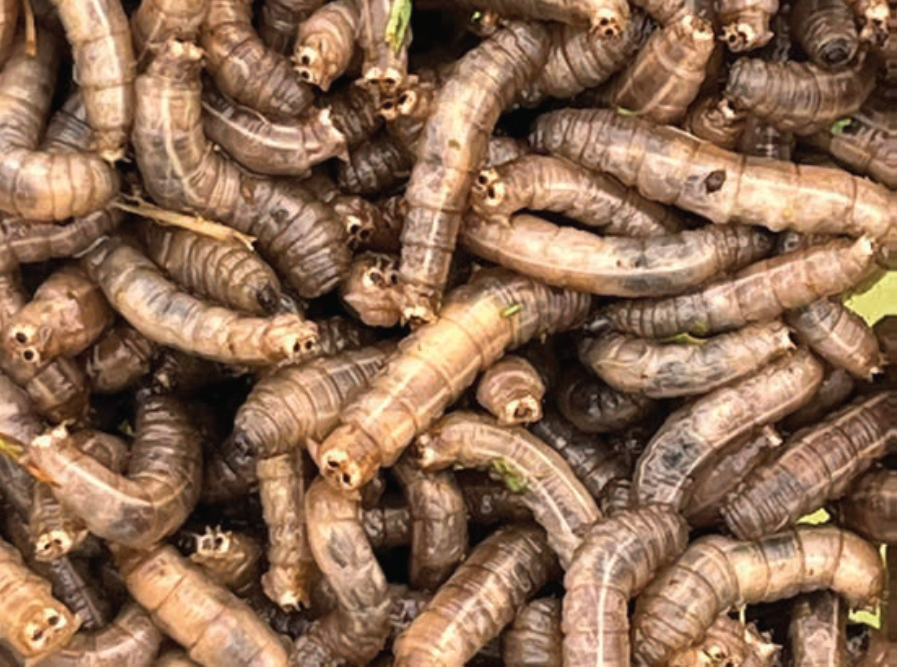 | 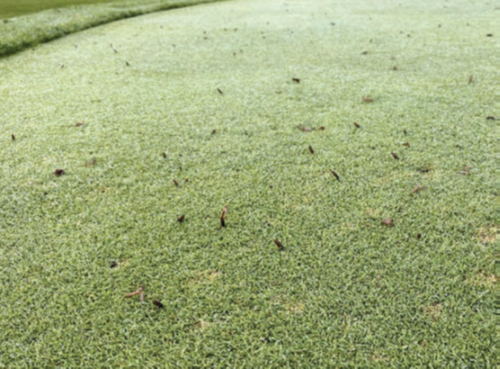 |
| Left: crane fly leatherjackets. Right: pupal cases from recently emerged crane fly adults. Source: Ron Townsend, Syngenta. |
Understanding the pestEuropean crane flies produce one generation per year, making proper application timing critical for successful control. Adults emerge and lay eggs in late summer and fall. After hatching, larvae feed throughout the fall, overwinter in the soil and resume feeding aggressively in spring before pupating and emerging as adults. The larval stage is responsible for nearly all turf damage.
View the full lifecycle chart for European and common crane flies.
Typical signs of damage include:
- Thinning turf stands
- Yellow or off-color patches
- Bare areas in heavily infested turf
- Secondary digging damage from raccoons and skunks feeding on larvae
Scouting recommendations
Regular monitoring is essential for identifying infestations before economic damage occurs.
- Sample soil during fall and early spring.
- Inspect the upper soil profile and thatch layer for larvae and pupal cases.
- Monitor adult crane fly activity during spring and fall flights.
One product. Two seasons of control.Atexzo® insecticide/miticide provides preventive and curative control of European crane fly populations. Powered by PLINAZOLIN
® technology, Atexzo features a novel IRAC Group 30 mode of action with no cross-resistance, offering turf managers an additional tool for resistance management programs.
| Preventive Control | Curative Control |
| Atexzo | 3.4-6.8 fl. oz./A prior to egg hatch
Up to 8.2 fl. oz./A for high pressure
| 6.2-8.2 fl. oz./A |
| Timing | Late summer to fall (Sept.-Oct.) near peak adult flight and egg hatch | Early spring (March-Apr.) when larvae are actively feeding and damage appears |
| Targets | Early-stage larvae before damage begins | Larger, more developed larvae after damage begins |
| Water-In Instructions | Apply ¼ inch of irrigation within 24 hours of application. Watering in as soon as possible improves performance, especially for curative applications, by moving the active ingredient down to where larvae are actively feeding. |
| Additional Options | Ference® insecticide: 8-16 fl. oz./A
Acelepryn® insecticide: 8-16 fl. oz./A
Acelepryn Xtra insecticide: 16-20 fl. oz./A | Provaunt® WDG insecticide: 18 oz./A at first sign of damage |
| Preventive European crane fly control |
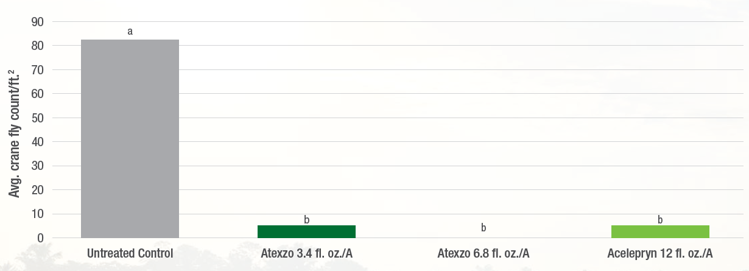 |
| Source: Ben McGraw, Ph.D., Penn State University. One application made on Oct. 1, 2019, targeting L2-L3 larvae and watered in with ¼ inch of irrigation. Applied in 87 gal./A of water. Assessments made 28 days after application. |
Key management considerations
A successful European crane fly program starts with regular scouting and timely applications. Key reminders include:
- Scout in fall and spring to detect populations early.
- Make preventive applications during egg hatch to stop damage before it starts.
- Apply curative treatments when damaging populations are present in spring.
- Water in applications with ¼ inch of irrigation within 24 hours.
- Use Atexzo preventively or curatively for flexible, season-long protection.
For golf courses, sports fields and lawns facing annual crane fly pressure, Atexzo provides a flexible, proven solution that delivers control in the fall and spring, helping preserve turf quality while reducing damage from leatherjackets and wildlife feeding activity. Learn more at
GreenCastOnline.com/Atexzo or download the
Crane Fly Solutions Sheet.
All photos are either the property of Syngenta or are used with permission.
© 2026 Syngenta. Important: Always read and follow label instructions. Some products may not be registered for sale or use in all states or counties and/or may have state-specific use requirements. Please check with your local extension service to ensure registration and proper use. Acelepryn®, Atexzo®, Ference®, GreenCast®, PLINAZOLIN®, Provaunt® and the Syngenta logo are trademarks of a Syngenta Group Company. All other trademarks are the property of their respective third-party owners.