Prevention and Control for Thrips, Aphids and Mites
-
February 27, 2026
-
Share this article:
- SHARE:
As temperatures rise and humidity levels fluctuate, greenhouses and nurseries become ideal environments for some of the most difficult-to-control insect pests, including thrips, aphids and mites. These insects can cause significant plant damage and create entry points for disease, accelerating overall plant health decline. Prevention is key to optimizing control and minimizing long-term impact.
Identify Common Insects and Early Signs of DamageThripsThrips are tiny insects that feed on pollen, flower petals and tender plant tissue, causing leaf stippling, scarring and distortion. Some species also transmit destructive plant viruses such as impatiens necrotic spot
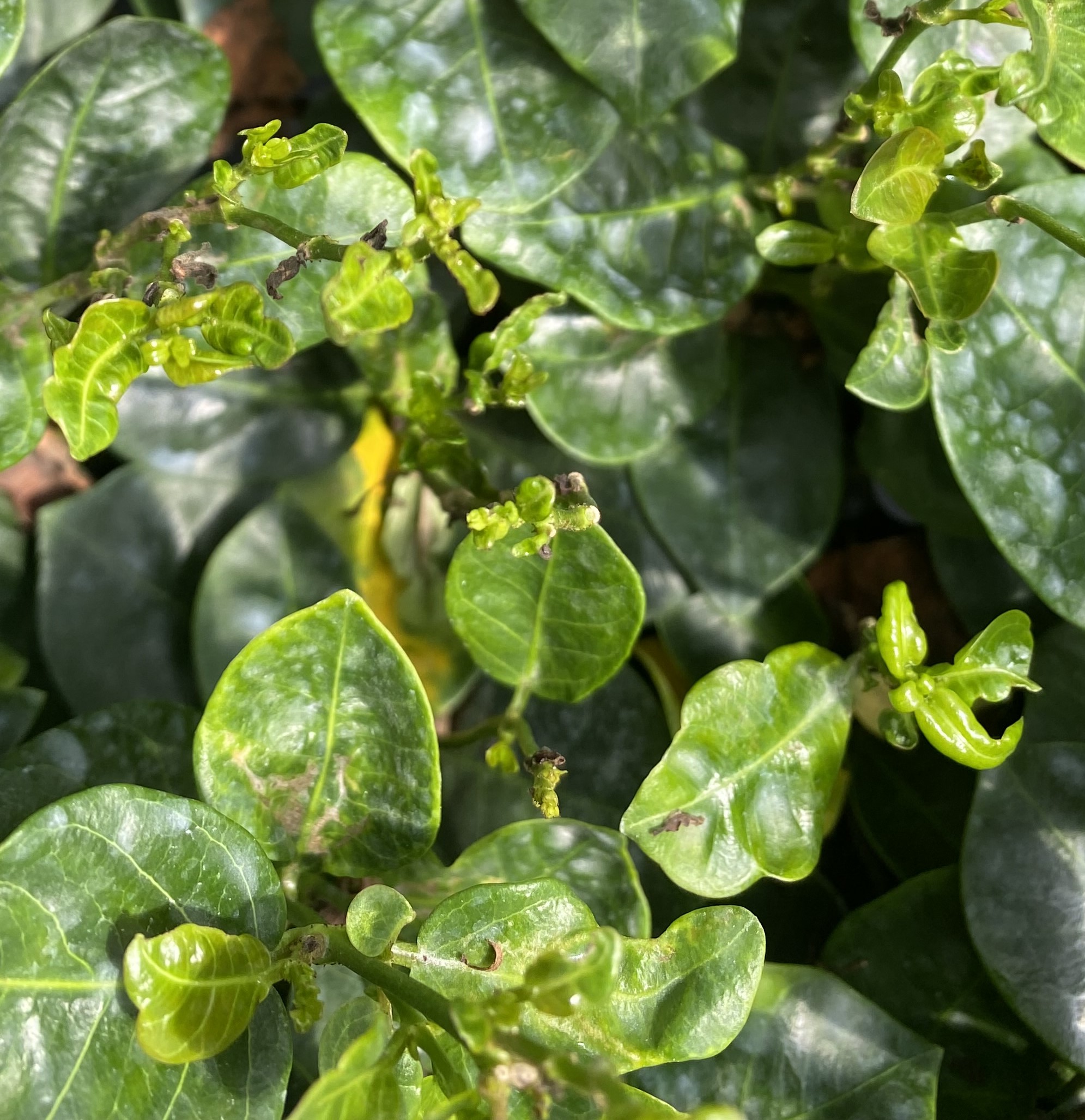 |
| Thrips injury on Dipladenia, Nancy Rechcigl, 2023 |
virus and tomato spotted wilt virus. Due to their short life cycles and ability to hide within plant material, thrips can be difficult to manage once populations are established. Preventive insecticide applications are often recommended to help reduce pressure and prevent damage.
AphidsAphids have piercing-sucking mouthparts that penetrate the phloem and extract plant sap, reducing overall plant vigor. Both adults and nymphs contribute to damage, which may include reduced leaf expansion, leaf discoloration or silvering, leaf drop and honeydew secretions that can lead to black sooty mold on leaf surfaces. Early detection and control are critical to help prevent rapid population growth and secondary issues.
MitesMites are common spring pests that become active as temperatures rise. Two-spotted spider mites typically feed on the undersides of leaves, while broad mites target young,
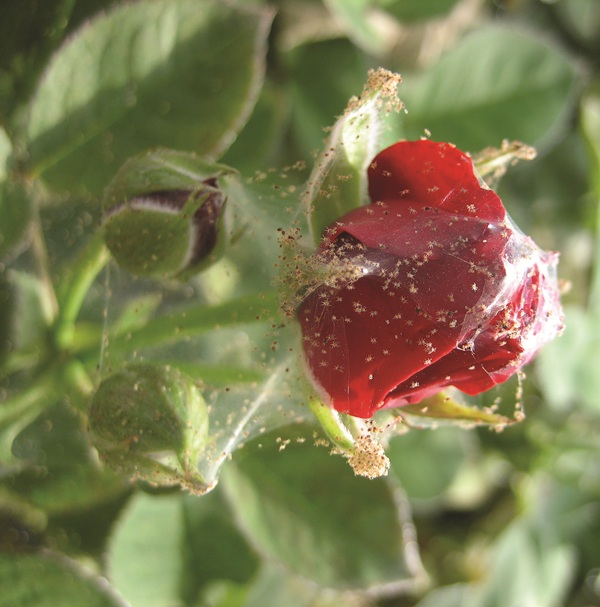 |
| Spider mites on rose, Nancy Rechcigl, 2022 |
developing tissue as it unfolds. Early symptoms often appear as white, speckled stippling on upper foliage. Since mite populations can overlap across multiple generations and life stages, they are especially challenging to control once established and may require multiple targeted treatments.
Enhance Defense with VykendaWhile pest identification and early prevention are essential to protecting crop quality and market value, an effective insecticide rotation program is just as critical. Many greenhouse pests are becoming increasingly difficult to control due to the development of resistance to existing chemistries.
Powered by PLINAZOLIN
® technology,
Vykenda™ insecticide/miticide introduces a new class of chemistry for the ornamental market in IRAC Group 30. With no known resistance or cross-resistance to other insecticides, Vykenda is a strong tool for resistance management.
Get extended GreenTrust 365 rebates with Vykenda and TrefintiAs part of the GreenTrust
® 365 program INNOVATION EXTENSION, Syngenta is lengthening the program’s qualification period and GT Bonus Booster for Vykenda and
Trefinti™ nematicide/fungicide.
Purchase Vykenda or Trefinti between now and March 31, 2026 to earn an additional 2-3% rebate! Vykenda pairs effectively with
Mainspring® GNL insecticide, which is proven to control sucking pests such as whiteflies and aphids. Rotating Vykenda with Mainspring GNL gives growers a comprehensive solution for managing nearly all common greenhouse insects.
For more information, visit
GreenCastOnline.com/Vykenda to learn how to incorporate Vykenda into your pest management program.
All photos are either the property of Syngenta or are used with permission.
© 2026 Syngenta. Important: Always read and follow label instructions. Some products may not be registered for sale or use in all states or counties and/or may have state-specific use requirements. Please check with your local extension service to ensure registration and proper use. GreenCast®, GreenTrust®, Mainspring®, PLINAZOLIN®, Trefinti™, Vykenda™ and the Syngenta logo are trademarks of a Syngenta Group Company. All other trademarks are the property of their respective third-party owners.