Proactive Disease and Growth Management Starts Here
-
February 27, 2026
-
Share this article:
- SHARE:
As spring approaches, greenhouse and nursery operations shift into high gear. With multiple crops in production, each at different growth stages and each facing unique disease pressures, this critical time leaves little room for error. Without a proactive plan, small issues can escalate quickly, impacting plant quality and marketability. An agronomic program from Syngenta can provide an effective strategy for applying products with different modes of action to achieve control, reduce the risk of resistance development and maintain crop quality from start to finish.
With this foundation in place, it’s essential to understand the primary disease pressures that threaten spring production and how to stay ahead of them.
Know the Threats
Powdery Mildew
Bedding plants are most susceptible to powdery mildew between late spring and early summer. To stay ahead of this pathogen, it’s important to properly identify its characteristics, including white, talcum-like spots
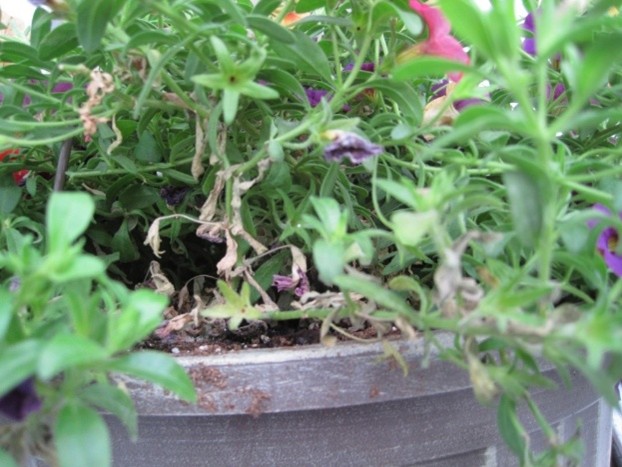 |
| Powdery mildew on Calibrachoa. Rechcigl, Syngenta |
(“colonies”) on leaves, stems and flowers. These spots gradually cover surfaces and cause leaves to yellow or brown and eventually drop.
Leaf Spots
Leaf spot diseases are likely to develop during the later spring months as temperatures rise amid increases in rainfall and nightly dew, creating conditions for fungal spores to germinate. Fungal pathogens that cause leaf spots include Alternaria spp., Cercospora spp. and Colletotrichum spp, while bacterial pathogens include Xanthomonas spp. Fungal leaf spots are rounded with a distinct margin and colored border appearing initially on the lower and interior canopy.
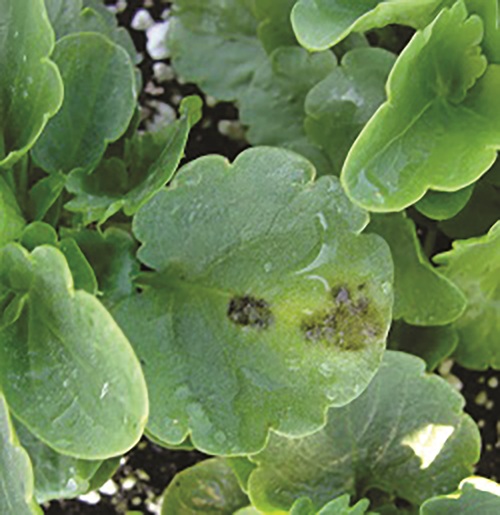 |
| Early Cercospora leaf spot on pansy. Syngenta photo |
Bacterial spots form in the same areas with a more angular, water-soaked appearance.
Solutions for Prevention
Syngenta has proven solutions found within the Spring Bedding Agronomic Program to help growers control diseases like powdery mildew and leaf spots, including:
- Mural® fungicide
- Provides control of key foliar, stem and root diseases including Botrytis, Rhizoctonia, leaf spots, powdery mildew and anthracnose.
- Postiva™ fungicide
- Features two modes of action to provide long-lasting protection against the most challenging ornamental diseases, including suppression of powdery mildew and leaf spots.
Overall plant protection doesn’t end with disease protection. Bonzi® plant growth regulator is formulated to ensure plants stay compact and strong by reducing internode stretch to keep them marketable and attractive. Labeled for multiple application methods, Bonzi offers great versatility and flexibility and can be used on a variety of bedding plants, bulb crops, annual and perennial plants, as well as on herbaceous and woody ornamentals.
For more information on agronomic programs from Syngenta, visit GreenCastOnline.com/Solutions.
All photos are the property of Syngenta or are used with permission.
© 2026 Syngenta. Important: Always read and follow label instructions. Some products may not be registered for sale or use in all states or counties and/or may have state-specific use requirements. Please check with your local extension service to ensure registration and proper use. Bonzi®, GreenCast®, Mural®, Postiva™ and the Syngenta logo are trademarks of a Syngenta Group Company. All other trademarks are the property of their respective third-party owners.